Friday, February 14, 2014

REPOST: Big Government, will you be my Valentine?

In this satirical article from Slate, Bob Garfield discusses the major events and controversial issues in American history that have shaped the love or detestation of its citizenry.  In a big government like the US, enormous issues exist and people often rationalize things based on their political leanings.

Image Source: slate.com


Seventy-two percent of Americans say big government is a greater threat to the U.S. in the future than is big business or big labor, a record high in the nearly 50-year history of this question. –Gallup Organization, Dec. 13, 2013

You are hulking and awkward, humorless and impatient. You are pathologically regimented and nerdy almost beyond belief. You are penny-wise and pound-freaking-ridiculous. Every now and then your behavior is simply reprehensible. So maybe this is perverse, because also—ewww­—you’re my uncle. But I am so in love with you.

Let me count the ways:

You protect me from terrorists and pathogens and pollution and bigots and foreign armies and racketeers. You enforce a semblance of order in the neighborhood and in the marketplace. You finance stuff that I use all the time, more or less for free: bridges, dams, GPS, federal reserve banks, crash-test dummies (indirectly), and Medicare (soon).

You deliver my mail, plus the odd cruise missile.

Not to mention my land-grant-college education and my graphite and titanium golf clubs—dual-use materials researched and developed by you. Stealth fighter shmealth shmighter, we’re talking 30 extra yards off the tee, baby.

Also you invented the Internet, which is soooo great for global communications and last-minute shopping. Meanwhile, you’ve been ticking off items on the ol’ honey-do list. “End slavery,” check. “Eradicate polio,” check. “Clean Lake Erie,” check. “Elvis stamp,” thank you very much.

Twice in the past 85 years, from the New Deal to TARP, you saved the world from financial Armageddon. In the 20th century you defeated both fascism and communism—because of, not in spite of, your gigantism. So when the haters mock your size and the size of your heart, it breaks mine. When Newt Gingrich flamed you in his book ("The secular socialist machine represents as great a threat to America as Nazi Germany or the Soviet Union once did.”) it was like seeing you rank last in “Hot or Not.” All love, it is said, begins with pity.

Big Government, will you be my Valentine? Truthfully, this was love at first sight. You didn’t even have to offer Big Bird or Obamacare. You had me at the Louisiana Purchase—a huge federal expenditure guaranteeing westward expansion. Fifteen states emerged, in whole or in part, from that budget-busting, tax-and-spend initiative—all 15 of them red.

That was a Thomas Jefferson deal. So much for the modest federal aspirations of the founders. In fact, as historian Steven Conn of Ohio State likes to point out, the very first act of Congress after authorizing itself was an economic-stimulus law, Alexander Hamilton’s pet Tariff Act of 1789 protecting domestic manufacturing and paying off debts from the Revolutionary War.

The Postal Act of 1792 did in the 18th century what the Internet has done in modern times: connected a far-flung world and marketplace. The transcontinental railroad joined the coasts via federal land with federal loans. The Homestead Acts lured settlers to the Wild West, a centurylong land redistribution program … conceived by Republicans.

Pretty ironic, eh? Oh, Big Government, not only does conservative dogma ignore the GOP’s proud history, it ignores some bedrock conservative values—such as, just to name one, law and order. The same folks who demand you frisk loiterers want you to leave oil companies and banks unmolested by tyrannical job-killing measures like, whaddya call them … laws.

I feel for you, ya big lug. You’re so ungainly next to the sleek and comely free market, but let’s not forget that the captains of industry, with alarming frequency, go all Bligh on us:

 BP (manslaughter), GlaxoSmithKline (suppressing bad clinical news and illegally marketing unapproved drugs), JPMorgan Chase (subprime recklessness), Philip-Morris (lying merchants of cancer), Archer Daniels Midland (price fixing), HSBC (abetting drug-cartels’ money laundering), Enron (megafraud), Comcast (just plain sucking).

Yes, as I constantly say, among the things the free market is free of is conscience.

Now don’t go getting a big head, my dearest Uncle Sam, because in addition to a century of human bondage you have plenty to answer for. Spying on your own citizens is merely your latest outrage. Who can forget the CIA overthrows? The World War II internment of Japanese Americans. The Trail of Tears. The Vietnam War. The Red Scare. Tuskegee. The Amtrak cafĂ© car.

And yet I’m prepared to be forgiving. Social Security. Yellowstone. The Sherman Antitrust Act. Dude, memory foam! Yes, plutonium and weaponized bacteria aren’t the only things developed in a government lab. Touch-screen technology, too. Whatever number of $600 hammers went into my ATM and Tempur-Pedic pillow is fine by me.

Anyway, per the corporate crimes and misdemeanors listed above, you have no monopoly on institutional transgression. You do, however, have a monopoly on protecting the public from monopolies. And hostile ICBMs. And salmonella. With all due respect to the rights of individual states, some functions require scale.

New Mexico Division of Antitrust? Arkansas Institutes of Health? Vermont Aviation Administration? Alaska Department of Defense? As somebody once said, thanks but no thanks. Also, some things even private industry isn’t industrious enough for. To whom should we outsource food inspections or air traffic control … Blackwater?

But now there’s a Blue Scare, and they’re hating on you. They loathe your debt and your giveaways to freeloaders like the elderly, the poor, the unemployed, the war-disabled, and the just plain unlucky. They want the unregulated economy’s lucre to simply trickle down, like fracking-lubricated ground water, to the disadvantaged. As Florida Sen. Marco Rubio says, “Free enterprise makes people prosperous, all people prosperous, and big government makes people poorer.

But, gosh, Big Government, one of the things I so love about you is your generosity—not to welfare queens but to free enterprise itself. On top of the bridges and that other infrastructure you built, the stable society you have sustained through your do-gooder entitlement largesse offers business a dependable, educated workforce and vast affluent consumer base more or less entirely unwiped-out by famine, epidemic, civil strife, or grinding poverty. In other words, the supposed welfare state your enemies so despise is the ultimate trickle-down corporate welfare.

As for spending, it’s so infuriating when folks like House Budget Committee member Bill Flores start running you down. (“Every American family and 49 out of 50 states currently abide by some form of a balanced-budget requirement. If they can make the hard choices to pay their bills and live within their means, then Washington should too.”) But, dearest one, two-thirds of American families do live with huge debt burdens … called “mortgages.” Flores has two of them, totaling about $1.5 million. Last I checked, he hadn’t been strangled.

At business school nobody calls debt a noose. They call it a lever. That’s why corporations indebt themselves to the tune of trillions of dollars. Gee, Unc, you don’t hear Grover Norquist badmouthing bonds.

Yet he blackmails legislators into signing an anti-tax pledge. Why? Compared to the rest of the industrialized world, you tax us so little. In terms of individual tax rates, you are in the middle of the pack. As a percentage of GDP, at 27.3 percent you are near the bottom, 29 spots below Denmark (48 percent), one above Turkey. In a month or two, I’m going to file my tax return, SWAK.

Think of my check this way: sweets for my sweet. Big Government, be mine.


Pete Kampfer is an award-winning city manager and executive officer responsible for various award-winning development projects.  Get timely updates on US governance and leadership from this Twitter page.

Friday, January 3, 2014

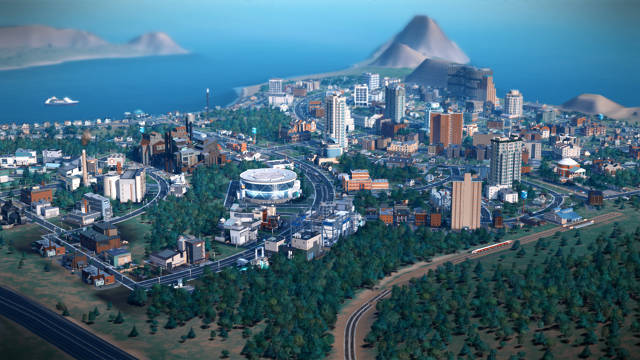
REPOST: Using The New Sim City, 6 Urban Planners Battle For Bragging Rights

Throughout its history, the Sim City series has been the domain of serious gamers and is often cited as a good tool to teach people about the basics of urban planning. FastCoExist.com kicks this up a notch by challenging six teams of urban planners in a competition to design the best in-game city.  
MITroit’s volunteer firefighters were bravely extinguishing the string of household fires that had broken out in neighboring Champignon. Champignon, a blue-collar enclave whose economy was built upon the oil and ore beneath its citizens’ feet, was rife with jobs and industry, but lagged in city services.

The selflessness of MITroit’s volunteer firefighters was even more pronounced considering Champignon had recently built a sewage runoff directed at MITroit. While MITroit’s unpaid firefighters were preventing Champignon’s citizens from immolating themselves, Champignon was slowly polluting the benefactor of its overwhelmed fire department. MITroit was using its water to put out Champignon’s fires, and Champignon was sending liquid waste in return.
Image Source: www.fastcoexist.com
This would be a juicier scoop were it real. Although the above events did occur, they took place within the incredibly complex world of the new Sim City, as part of a tournament thrown by Co.Exist that pitted some of the country’s preeminent urban thinkers against each other in a city building tournament. For this competition, in February, Co.Exist and Greg Lindsay--the co-author of the future cities book Aerotropolis and Co.Exist contributor--assembled six teams of urban think tanks to pit their planning chops against each other in the new version of the city planning game.

The thought was that coupling the players’ collective genius with SimCity’s planning dashboard would result in a vision of a potential urban future, a blueprint for the future of cities. That would not turn out to be the case.

“I’d absolutely play the game again,” MITroit Co-Mayor Anna Muessig later said. “But I’d like to play with a different incentive structure, rather than clobbering my colleagues.”

AN URBAN PLANNER’S DREAM


The tournament was like the setup to some high-brow joke you might hear in between speeches at a TED Conference:

Six urbanists, three architects, three journalists, and a video game designer walk into a room…
Image Source: www.fastcoexist.com
SimCity game designer Stone Librande was encircled by some of the foremost thinkers in urban planning. Twenty minutes earlier, Librande was helping children proceed through the game’s tutorial. Now, he was explaining the game’s mechanics to people whose academic and professional lives were dedicated to urbanism. Librande’s urban planning knowledge was quaint by comparison. He built SimCity over the past three and a half years with Netflix documentaries on urbanism as his only academic resource.

“You won’t really be competing against one another, just not cooperating with one another,” Librande said. Everyone laughed. This was urbanism humor.

Urbanists playing SimCity is hardly new. The first edition of SimCity was released in 1989, and the franchise has been credited with inspiring an entire generation of urban theorists. SimCity is “arguably the single most influential work of urban-design theory ever created,” said a 2006 New Yorker profile of Will Wright, designer of the original SimCity.

But the latest version contains two new wrinkles that have city wonks downright giddy. First, it uses what’s called agent-based modeling. Everything you see on the screen actually occurs in the city. There’s no superficial traffic animations, for instance, like in past versions. If you see a truck transporting oil from the refinery you built, there is actual oil being trucked through your city. Each item on the screen is its own discrete piece of data in your city.
Image Source: www.fastcoexist.com
For the purposes of the tournament, the second new feature of the game was more important: Inter-city interaction. Excess goods or services can be bought and sold between cities in the same region. If the seams of a neighboring metropolis are bursting with trash, send your waste management fleet to clear some space (for a price). If your power grid sputters, buy some energy from the mayor next door who just flipped the switch on a new nuclear power plant.

These features, the game’s slick interface, and its troves of data are the exact tools urbanists need to create the elusive “smart city”--a technocratic utopia where policy is informed by real-time data collection. After Librande’s rudimentary explanation, the crowd broke up into their separate teams for the most elite SimCity game ever conducted (probably).

PLANNING A CITY

Nearly every team planned to create a city independent of finite energy resources and the help of other cities. How each city planned to achieve sustainability and economic prowess differed:
  • MIT (MITroit): MITroit would be part industrial city, part tourist destination. “We wanted to do Detroit the right way,” MIT’s Anthony Vanky said.
  • KPF (XimCity): XimCity was to be a dense commercial and residential hub. The team researched the game beforehand (i.e. watched YouTube clips of people playing the beta version) and came in with pages of handwritten and typed notes on how to execute its vision. Everyone on KPF wore a suit. “We took the point of view that we should play the part of the professionals,” says KPF director David Malott.
  • OpenPlans (Openopolis): OpenPlans director Frank Hebbert planned to crowdsource ideas from off-site employees via Twitter and Google docs to construct a walkable, eco-friendly city with minimal car traffic.
  • Studio Gang (Looptopia): A city where function (being a “closed loop,” self-sustaining system) mirrored form (a cultural hub surrounded by concentric circles of roads).
  • Fast Company (Fastcotown): Sheer pragmatism. “I’m not trying to assert some kind of urbanist philosophy,” Co.Exist editor Morgan Clendaniel said. “I’m the control group.”
  • Studio-X (Champignon): Studio X was the only team that was aggressively disinterested in sustainability. Rather, Studio-X’s was unapologetically opportunistic. “We’re going to build brothels and stadiums, they go well together,” Studio-X Director Nicola Twilley joked. “Actually, we’re going to build a knowledge economy and charge your kids a fortune to study there, because that’s the biggest racket around.”
Every city was solely focused on economic autonomy. There was no talk of creating mutually beneficial partnerships. In fact, teams merely saw one another as potential buyers of their wealth of goods and services. The easiest political philosophy is, apparently, Western European mercantilism.

“I would’ve expected everyone to come together and cooperate,” Librande said. “Instead, they competed. I’m glad they did because it was a lot more fun.”
For the full article, click here.
Pete Kampfer is an experienced city manager. Visit this Google+ page for more news and insights on well-managed cities.

Monday, December 9, 2013

Kermit emergency ordinance amends rising water rates

Water rates in Kermit, Texas, have doubled, even tripled in some areas, fanning the ire of residents.

Image Source: www.fwweekly.com

In response, city management is taking steps to alleviate the situation by passing an emergency ordinance that would amend the current water rates. The city council will soon be passing a newly proposed water rate amending ordinance, and will also decide whether or not the city government will compensate affected residents for November’s bill.

Image Source: www.newswest9.com

Majority of the residents in Kermit are breathing a sigh of relief after weeks of frustration over the increases in water rates, with bills going up as high as a hundred dollars more than usual. "It's had the whole town torn up, it really has, but now I think they've resolved it," said Rodney Hayes, owner of Mary’s Flowers in Kermit, in an interview with CBS 7 News. The business owner’s last three bills jumped hundreds of dollars each. “I feel relieved that the council did an excellent job for us there.”

Image Source: www.cbs7kosa.com
City Manager Gloria Saenz announced that the city will soon be repealing the current water and sewer rate ordinance, and will be rebasing rates in the following rate scheme: The $17 rate will be dropped down to a $13 rate, making it just a dollar higher than the original rate, before the ordinance was passed. Any amount of water over 5,001 gallons will be charged a flat rate of $2.60 per 1,000 gallons. Sewer rates will have a flat rate of $13.

However, some residents, such as Donna Paehl, whose November water bill doubled, are worried about the bigger picture. "My concern is what are they going to do to compensate those people from a huge bill and especially right now with the holidays, people need their money,” she said.

Pete Kampfer is an experienced city manager who has done over ten years of government work. Visit the Twitter page for more news about Kermit City Management.